







Known as the Diamond State, Arkansas can boast that it is home to the only active diamond-bearing site in America that is open to the public. Visitors to Crater of Diamonds State Park have only to pay a rental fee for basic equipment – after that they’re able to dig for treasure anywhere in a huge field, and it is finders, keepers. Over 37,000 diamonds, along with garnets, amethysts, agates, and more, have been discovered since the site opened as a state park back in 1972.
But there are many other cultural gems to be discovered in Arkansas as well, and a good argument can be made that one of the most dazzling that can be seen right now is at the Historic Arkansas Museum in downtown Little Rock. That’s where a posthumous exhibit of the artworks of Little Rock native son Dwight “Kuimeaux” Drennan is on display.
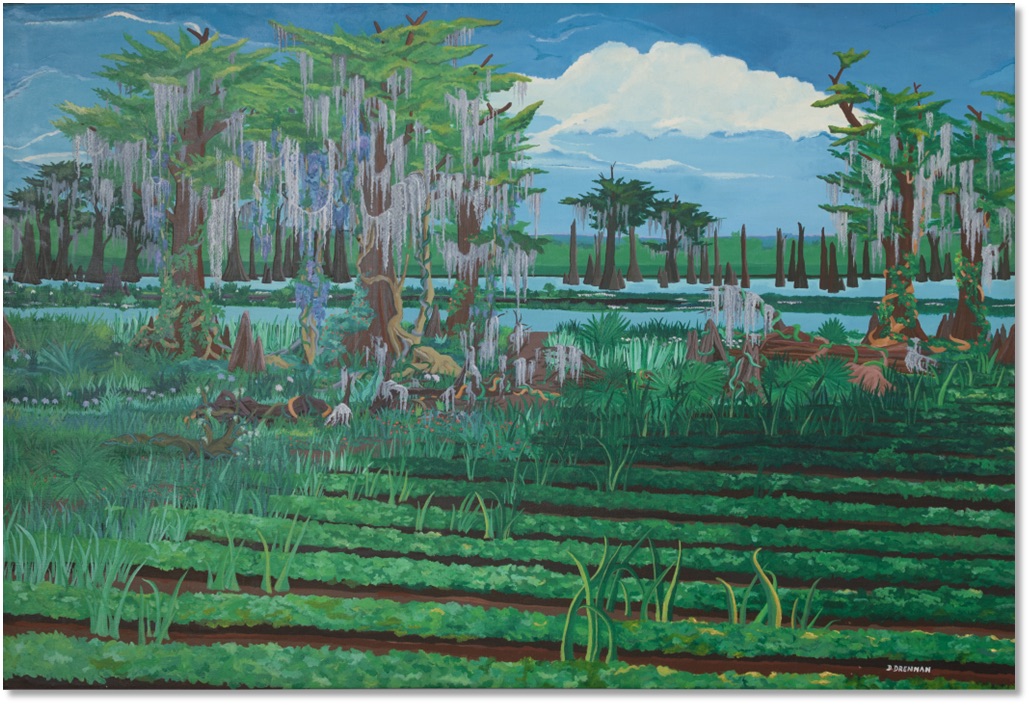 “Kuimeaux’s World” is a showcase of Drennan’s expansive imagination and dedication to place. His paintings of lush bayou landscapes and southern Gothic architecture are drenched in rich color. His intricate pen and ink sketches of rural and small-town life in Arkansas and Louisiana translate the commonplace into the engagingly picturesque. His renditions of uniquely southern spaces and places, be they rice fields or commercial streets, sacred or honkytonk, are lavished with minute detail, and leavened with homespun quirks.
As this exhibit demonstrates, Kuimeaux’s impulse to create was unbridled – his art extended beyond paper and canvas to many other kinds of surfaces: a birdhouse, a recipe box, an antique crumb catcher – even the envelopes containing the letters he sent to friends and family. Kuimeaux was a thoughtful conversationalist and a prolific letter-writer, and this exhibit is blessed with a collection of several of these mini-works of art that had been sent out in the mail. The front of each envelope is so crammed with busy scenes of cypress trees festooned with Spanish moss, or billboards for pool halls, or water towers, vintage autos, vegetable stands – that Kuimeaux scarcely had room left to write the name and address of his intended recipients.
Yet for all of this abundant and uplifting expression over the course of his lifetime, the artist made very little money from it.
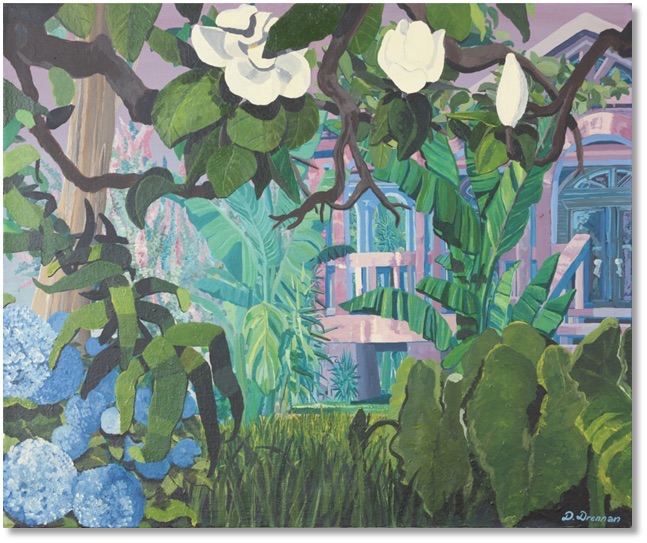
So: is Kuimeaux Arkansas’s Van Gogh? Such a comparison is too facile, of course, although there are a few notable parallels. Each artist turned to nature as a source for inspiration, and employed a visual vocabulary that resonates today, expressing vitality through bold patterns and vibrant colors.
Another similarity is that both Van Gogh and Kuimeaux had devoted family members and friends who provided lifelong camaraderie and support.
In Kuimeaux’s case, Benny Turner was one of those friends. They struck up a friendship when Kuimeaux’s family moved out of Little Rock in 1963 to rural Saline County, Arkansas. Despite a couple of years’ difference in age, the two hit it off, and in a recent telephone interview, Turner talked about their 60-year friendship.
“He was always Dwight to us,” Turner said. “The first conversation we had was during one of the election cycles around that time when Dwight showed up at my family’s house with some yard signs for a local Democrat and we started talking about politics.”
Turner noted that if the Drennan family had remained in Little Rock, Dwight would have gone to Central High School, which had been the site, a decade earlier, where the Little Rock Nine integrated the school despite virulent local opposition. But by the late 1960s and on into the ‘70s and ’80s, Arkansas Democrats like William J. Fulbright, Dale Bumpers, and Bill Clinton were gaining attention both locally and nationally for their efforts to influence the changing political dynamics of the South.
Social change and civil rights – as well as music and girls – were topics that the boys talked about regularly in study hall at school. And when Dwight went off to college in 1968, he majored in political science, with a minor in history. But he also squeezed in a few art classes as a senior, and by the time he graduated, he’d made the decision to pivot to art. He wanted to use it to record both contemporary life and the natural heritage of the Delta region of Arkansas, Louisiana and Mississippi.
By 1975, Dwight was traveling throughout the Deep South, making new friends. It was in New Iberia, Louisiana, where the locals dubbed him “Kuimeaux.” Pronounced “KEY-mo,” the nickname was an abbreviated, French-Cajun version of Kemosabe, the term used back in the 1950s TV show “The Lone Ranger” to denote “faithful friend.” A photograph from that time, showing Dwight wearing a bandana wrapped around his forehead, may suggest other references from that show. In any event, the name stuck.
For several years, Kuimeaux used Monroe, Louisiana, as his home base. Benny Turner, meanwhile, had moved to New York to get into the music business. They stayed in touch via phone calls and especially letters.
“Monroe was the pinnacle of his success in terms of recognition in the art world,” Benny Turner recalled. “It was his period of greatest activity. He was in numerous gallery shows and art festivals.”
Kuimeaux was accepted three times into a prominent regional show, the Arkansas Arts Center’s Delta Exhibition. He also had a one-man show with the Arkansas Arts Council.
But when a catastrophic fire erupted at his house in that Louisiana town, it not only consumed much of his work and killed his two dogs, it also slowed his forward momentum.
“The fire had a big emotional effect on him,” Turner said.
It isn’t that he stopped painting, and Turner claims his old friend did some of his best work after the fire, but for no discernible reason, the sale of his paintings fell off precipitously.
Kuimeaux moved back to Arkansas and supported himself with odd jobs. He didn’t give up the idea of monetizing his work, but efforts to try to sell greeting cards with his artwork on them failed.
“What was it that Quincy Jones said?” Turner said. “Something like ‘Art and commerce don’t speak the same language but they sleep in the same bed.’”
Turner didn’t quite nail Q’s quote, but his point was, Dwight didn’t enjoy trying to sell his work. He never saw himself as a salesman. And then when he received a diagnosis of COPD in 2009, he scaled back his ambitions further, his energy depleted.
“But he never stopped hoping that someday his work would be seen and enjoyed by more people,” Turner said.
“I’ll be honest,” Turner continued, “I have felt some regret that much earlier, when I was in the music business and I understood the importance of being able to manage a career – I wish I would have stepped forward.”
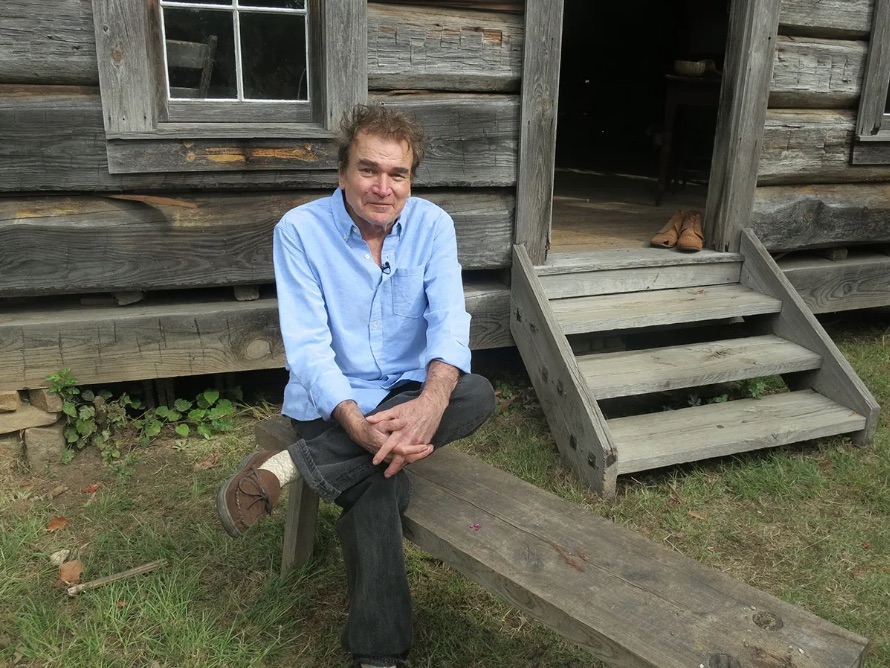 But in fact, he and some of Dwight’s other friends have stepped up over the years – first in 2015 to videotape Kuimeaux, frail but spirited, discussing some of his works. Those sessions can now be viewed on YouTube.
In one recording, Kuimeaux said, “I know it’s ok if I don’t make any money…” but he went on to express this wish: “…my dream is that my work will be in museums, art museums, any museum. If my artwork can produce this joy in people who view it, that's what's important to me now.”
Kuimeaux’s friends heard him, and took him seriously.
When the artist passed away in July, 2022, Turner and some of Kuimeaux’s other longtime friends – Ed Eaves, Sonny Gault, Melissa Woods, and Chris Maxwell – got together, secured the permission of Kuimeaux’s sister, Linda McInturff, and agreed to try to make their friend’s dream come to fruition.
The Kuimeaux Project was birthed shortly thereafter. The group brought together and photo-documented almost all of Kuimeaux’s work. By April, 2024, they’d built a website and developed a social media presence, then turned their attention to lining up an exhibition of his work. That has resulted in the memorable Kuimeaux’s World exhibit at the Arkansas Heritage Museum, which will be on view well into 2027. There also are plans underway to turn those 2015 YouTube videos into a documentary about Kuimeaux’s life.
All of this would gratify the artist immensely, but it does point out a longstanding problem.
Dwight “Kuimeaux” Drennan lived nearly twice as long as Van Gogh, but the two artists shared a plight that too many artists everywhere can recognize. Why should artists have to wait until they’re dead to have their work appreciated?
By all means, check out Kuimeaux’s work online – and visit the exhibit in person if you can. It’s wonderful art, and it represents an extraordinary effort on the part of his friends.
But let’s hope it helps us to think in the present tense, too: what more can we do to invest in the artists who are alive and at work today?
Barbara Lloyd McMichael is a freelance writer living in the Pacific Northwest. Check out her new Pacific Rim Story Laboratory website
PHOTO CREDIT: All photos "Courtesy of the Kuimeaux Project"
Barbara McMichael
Barbara Lloyd McMichael is based in the Pacific Northwest and writes about books and culture. She writes a syndicated weekly book review column called “The Bookmonger” that focuses on Northwest books and authors. Her PR for People® Book Review is written exclusively for The Connector.